What is an Elinvar Hairspring?
Picture this: you’re a railroad worker in the 1800s, and your pocket watch is basically your lifeline. Miss the timing by even a few minutes, and you might be looking at a catastrophic train collision.
No pressure, right?
That’s where the story of the elinvar hairspring begins – born out of necessity when America’s expanding railroad network demanded timepieces that could handle whatever Mother Nature threw at them.
Why Railroad Workers Needed Super-Tough Timepieces
Working the rails wasn’t exactly a gentle profession. These hardy folks dealt with scorching summers, freezing winters, and everything in between. Their pocket watch hairsprings had to endure temperature swings that would make your smartphone throw a tantrum.
But temperature wasn’t the only villain in this story. Humidity changes, magnetic fields from the massive steel trains, and the constant jarring and vibration of railroad work all conspired against accurate timekeeping. When railroad watches were inspected, they had to maintain accuracy within 30 seconds – a standard that seems almost quaint by today’s atomic clock standards, but was incredibly demanding for mechanical timepieces of that era.
Enter the Game-Changer: Hamilton’s 922 Elinvar Movement
Hamilton Watch Company wasn’t about to let physics defeat American ingenuity. They introduced the 922 Elinvar Watch Movement, which was essentially the 992 Movement’s cooler, more sophisticated.
The key difference?
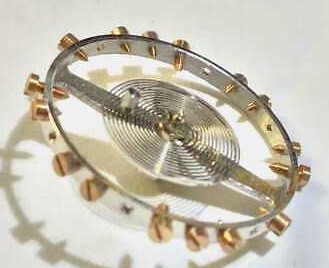
They swapped out the conventional steel hairspring for something revolutionary – a mono-metallic balance wheel paired with an elinvar metal alloy hairspring.
This wasn’t just a minor tweak; it was a complete reimagining of how watch hairsprings could work.
The Hamilton 992 elinvar represented a quantum leap in horological engineering, addressing problems that had plagued watchmakers for decades.
Ready to preserve a piece of horological history? Head to our Watch Restoration services page to learn more here.
The Temperature Problem That Plagued Traditional Timepieces
Here’s where things get interesting from a physics standpoint. Traditional steel hairsprings had a nasty habit of becoming less elastic when temperatures rose. Think of it like a rubber band that gets stretchy when warm – except in this case, a stretchy hairspring meant your watch would run slow in summer and fast in winter.
For railroad workers operating on strict schedules, this temperature sensitivity was more than just inconvenient – it was downright dangerous. Trains running on different timing could spell disaster on single-track lines where precise scheduling prevented head-on collisions.
The traditional solution involved using a bimetallic balance wheel that would expand and contract with temperature changes, theoretically compensating for the hairspring’s temperature sensitivity. But this was like trying to solve a math problem by introducing another variable – it worked, but barely, and required constant adjustment.
How Elinvar Metal Alloy Revolutionized Timekeeping
The genius of the elinvar metal alloy lay in its name – a contraction of “elastic invariable.” This nickel-steel alloy maintained consistent elasticity regardless of temperature fluctuations. No more fast-running watches in winter or slow ones in summer. The Elinvar hairspring essentially made temperature compensation automatic.
But wait, there’s more! (As if we’re selling some kind of horological infomercial.)
The elinvar hairspring brought additional benefits that traditional steel couldn’t match:
Rust-Proof Construction
Made from nickel-steel alloys, elinvar hairsprings laughed in the face of humidity and moisture. While traditional steel hairsprings could develop rust that affected their performance, elinvar components stayed pristine even in harsh conditions.
Magnetic Resistance
Railroad environments were full of magnetic fields from the massive steel locomotives and electrical systems. Traditional steel components could become magnetized, causing timing irregularities. The elinvar hairspring’s composition made it significantly more resistant to magnetic interference.
Long-Term Stability
Perhaps most importantly, the 922 Elinvar movement eliminated timing changes that resulted from the degradation of traditional mainsprings and components. This meant watches could maintain their factory-specification accuracy for much longer periods.
The Technical Marvel Behind the Magic
The beauty of the elinvar hairspring system wasn’t just in what it did, but how elegantly it did it. By eliminating the need for complex temperature compensation mechanisms, the movement became both more reliable and easier to manufacture to consistent standards.
The mono-metallic balance wheel worked in perfect harmony with the elinvar hairspring, creating a timekeeping system that was remarkably stable across varying conditions. This wasn’t just an incremental improvement – it was a fundamental rethinking of how precision timekeeping could work in demanding real-world conditions.
Legacy of Innovation in Modern Horology
While we might take atomic clocks and GPS time synchronization for granted today, the innovations pioneered by the elinvar hairspring laid crucial groundwork for modern precision timekeeping. The principles of temperature-compensated, magnetically-resistant materials continue to influence watchmaking even in our digital age.
For collectors and enthusiasts, Hamilton pocket watches featuring elinvar hairsprings represent more than just timepieces – they’re tangible pieces of American industrial innovation, born from the practical demands of a growing nation’s railroad network.
Give Your Timeless Treasure the Care It Deserves
Got a Hamilton pocket watch in need of a little TLC? The Watch Doctor is the place to breathe new life into your treasured timepiece. With expert craftsmanship and a knack for handling vintage masterpieces, our services ensure that your watch stays as precise as the day it was built.
Don’t wait — start your watch’s next chapter by getting it serviced by the pros who know it best.

Mark Sirianni
25 Fraley St.
Kane, PA. 16735
watchdoctorpa@gmail.com
1-814-558-4818 Cell
1-814-837-9435
Charley
2012-2024